Why it matters

The conversation that changes a career isn’t evenly available.

Nemili starts from a gap that shows up again and again in the research: careers are changing faster and many people feel stuck. While mentoring works, access to the right person depends on where you start.

8 in 10

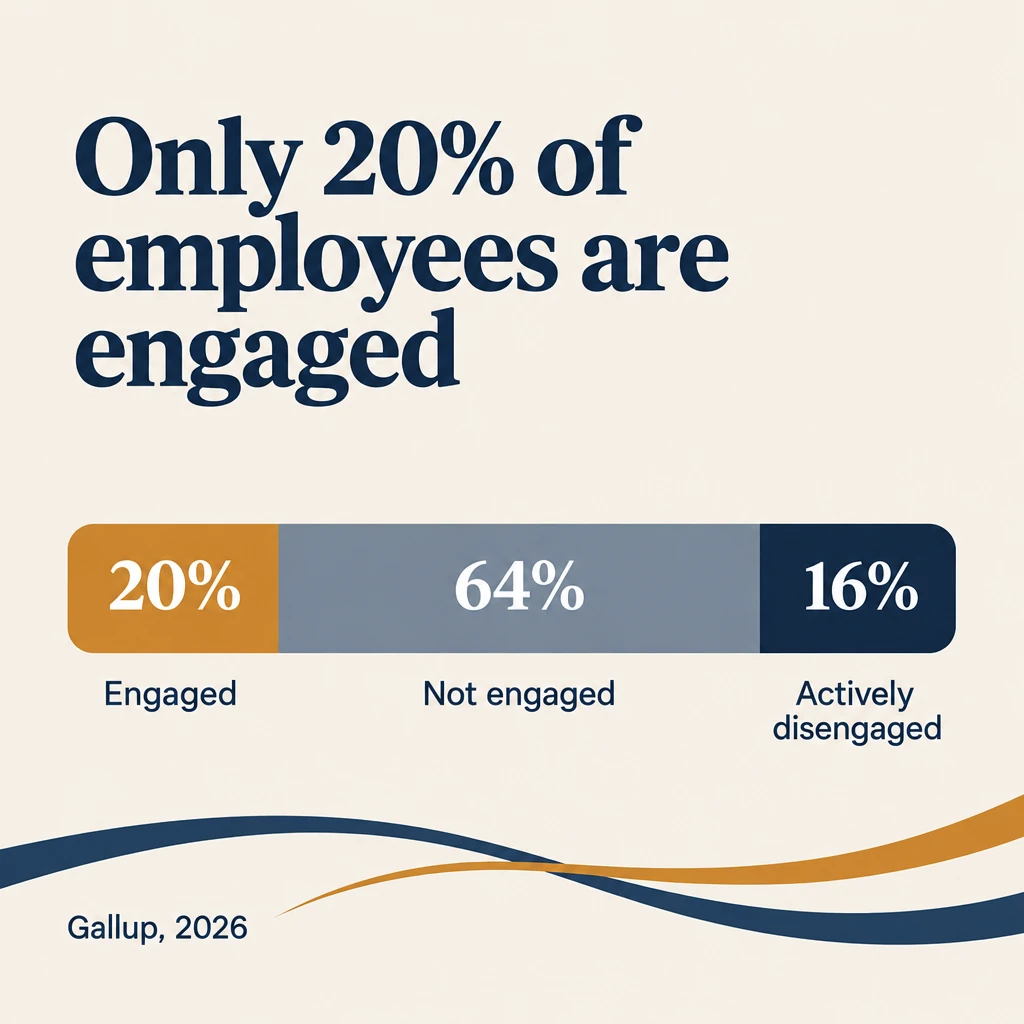
employees worldwide are not engaged at work, including 16% who are actively disengaged.

Gallup, 2026 [2]

45%

of people who voluntarily left a job say no leader proactively discussed their satisfaction, performance or future in the previous three months.

Gallup, 2024 [3]

I

Chapter I

Careers are changing. Guidance isn't keeping up.

Careers are changing · Feeling stuck · Guidance

01

Careers are being reinvented faster than anyone can plan them.

Employers expect about 170 million new roles and 92 million displaced by 2030, with roughly four in ten core skills changing. For individuals, reinventing a career is becoming the rule, not the exception.

The World Economic Forum surveyed more than 1,000 of the largest employers, representing around 14 million workers across 22 industry clusters and 55 economies. A net gain of about 78 million jobs is expected, but the skills they require change, which is why transitions matter.
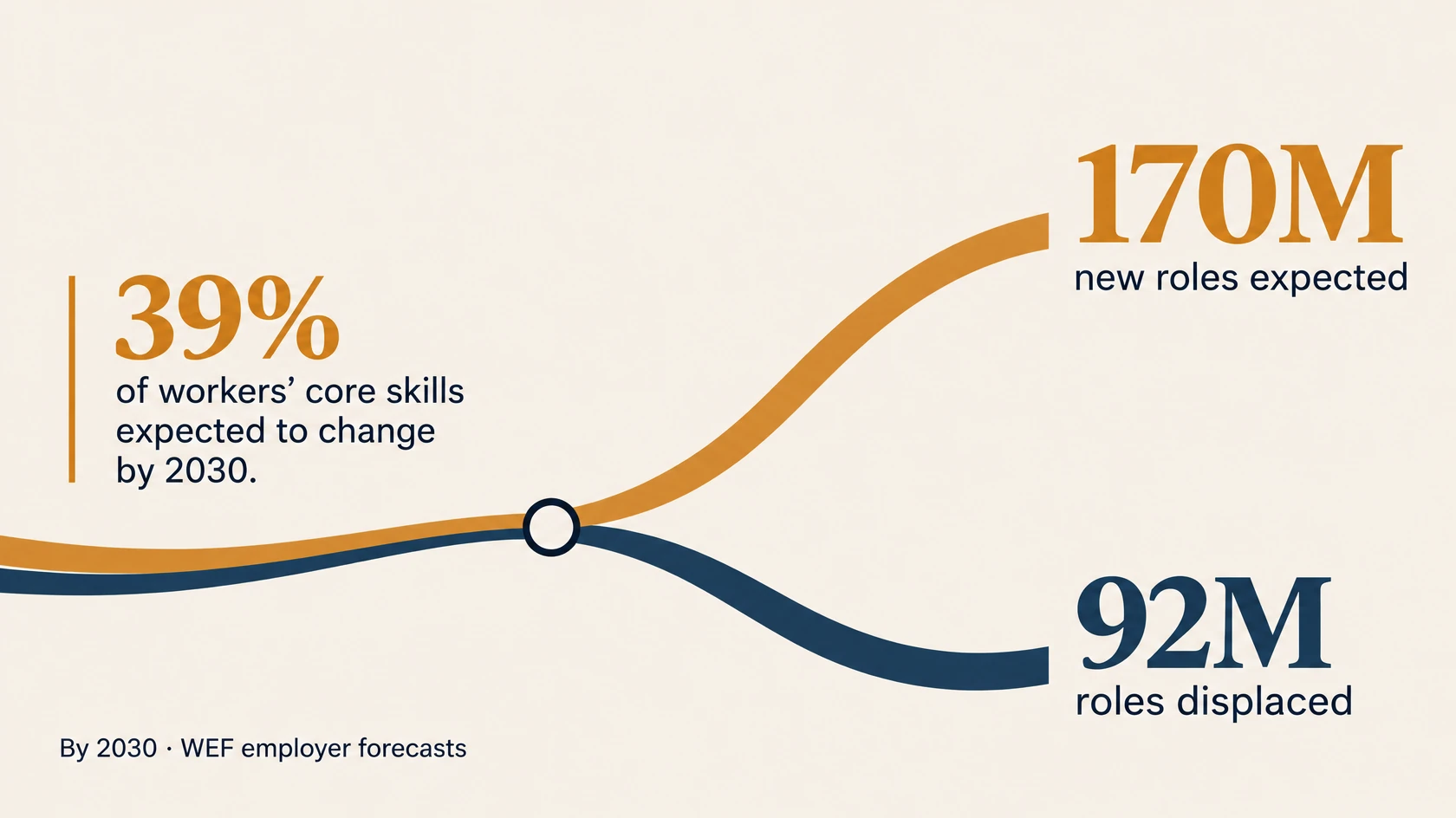
Two streams diverging: roles created and roles displaced by 2030

Employer expectations, not measured outcomes.

Source: World Economic Forum, Future of Jobs Report 2025

02

Most people at work feel stuck.

Gallup's 2026 report finds that only one in five employees worldwide is engaged. Sixty-four percent are not engaged and 16 percent are actively disengaged. In a separate study of people who left a job, 45 percent said nobody had discussed their future with them in the three months before.
  • Gallup estimates that low engagement costs the world economy about 10 trillion dollars a year, around 9 percent of global GDP.
  • In the US study of voluntary leavers, 42 percent said their employer could have prevented their exit. Among those who did have a conversation with a manager, fewer than three in ten talked about their career future.
  • LinkedIn reported that 75 percent of employees who moved to a new role inside their company were still there two years later, a higher share than among employees who did not move.
  • In EY's 2025 survey of full-time employees at large US organizations, workplace culture was the factor that united all four generations.

03

Across OECD countries, only 43% of students starting a bachelor's programme finish within the expected time, and 70% do so three years later. The OECD says low completion is often rooted in a mismatch between what students expect and what programmes offer, and in thin support, and it points to stronger career guidance as part of the answer. The OECD identifies career guidance as a lever to reduce inequality, and says it has to be targeted at the groups least likely to use it.
  • Education at a Glance 2025 says career guidance can be an effective way to support young people's education and training decisions, but that groups already excluded from the labour market are less likely to seek or use it, which is why it calls for more targeted outreach and support. It also stresses the importance of skills-based curricula and career guidance in helping graduates succeed in the labour market.
  • A May 2026 OECD policy brief built on the report calls for guaranteeing equitable access to effective support.
  • In Dream Jobs (2020), the OECD's education director, Andreas Schleicher, wrote that effective career guidance also serves to address inequalities.
  • Education at a Glance 2025 notes that career guidance can be an effective intervention, but that groups already excluded from the labour market are less likely to seek or use these services, so targeted outreach is needed.
  • The OECD reports that young people who express clear job plans around age 15 tend to do better ten years later than comparable peers who are uncertain.
  • A 2017 meta-analysis of career interventions (Whiston et al.) found positive effects, with personal guidance showing larger effects than self-service tools.
  • The OECD figures are cross-country averages.
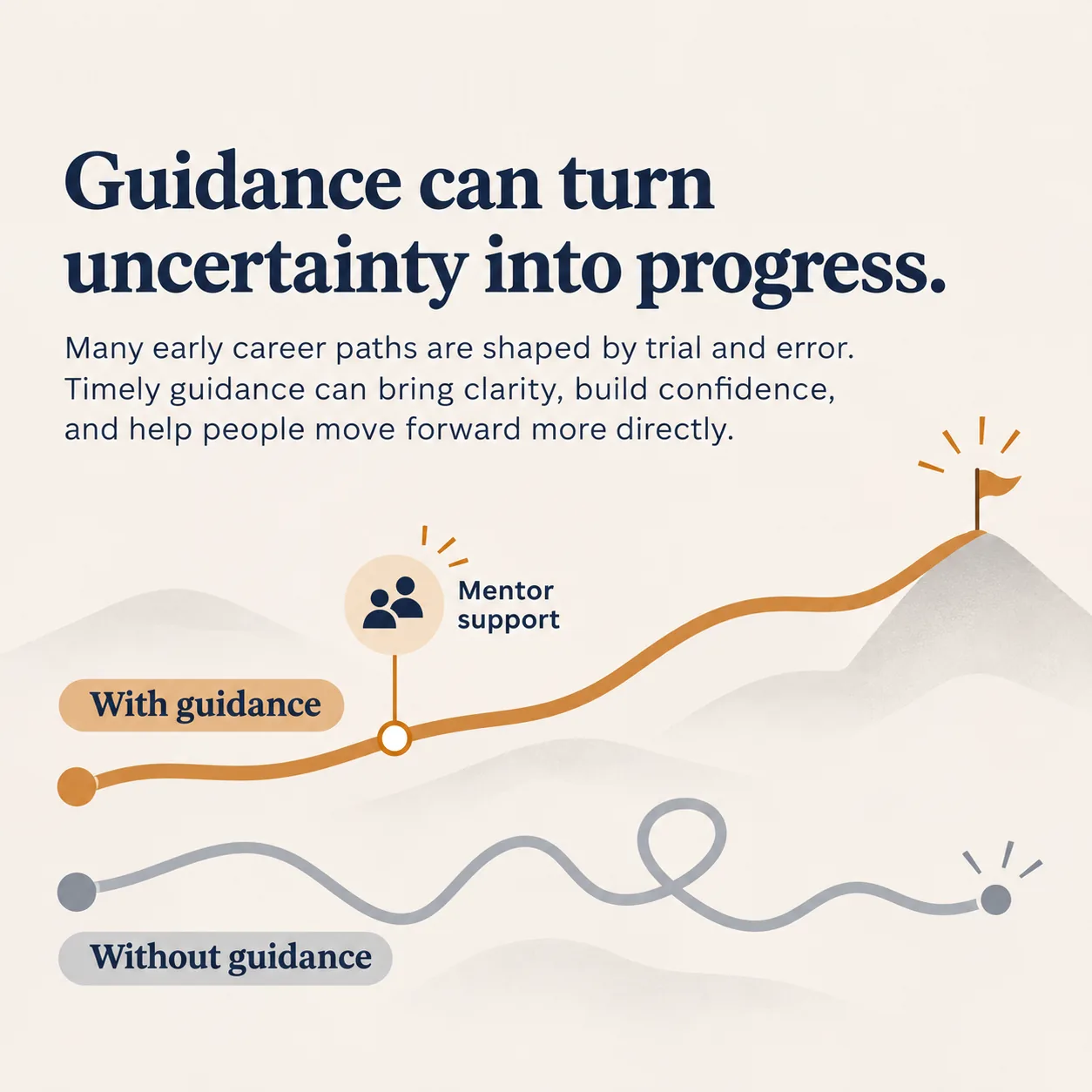
Two career paths: one rising steadily with mentor support, one wandering without guidance

Conceptual illustration.

Source: OECD 2025 · OECD 2020 · OECD 2021 · Whiston et al., 2017 · OECD 2026

II

Chapter II

Opportunities move through people. But not everyone knows the right people.

Networks · Unequal access

01

The person who helps is rarely the one you already know best.

In a randomized experiment on LinkedIn, covering more than 20 million members over five years, the connections that helped most were moderately weak ties: people you know a little, not your closest friends and not total strangers. Research reviews find that social contacts are a major route into jobs.

Across the experiments, about 600,000 new jobs were created. The classic explanation (Granovetter, 1973) is that acquaintances connect you to worlds you don't already know. Research reviews find that the share of people who found jobs through contacts varies widely by country and study, from about a quarter to more than eight in ten.
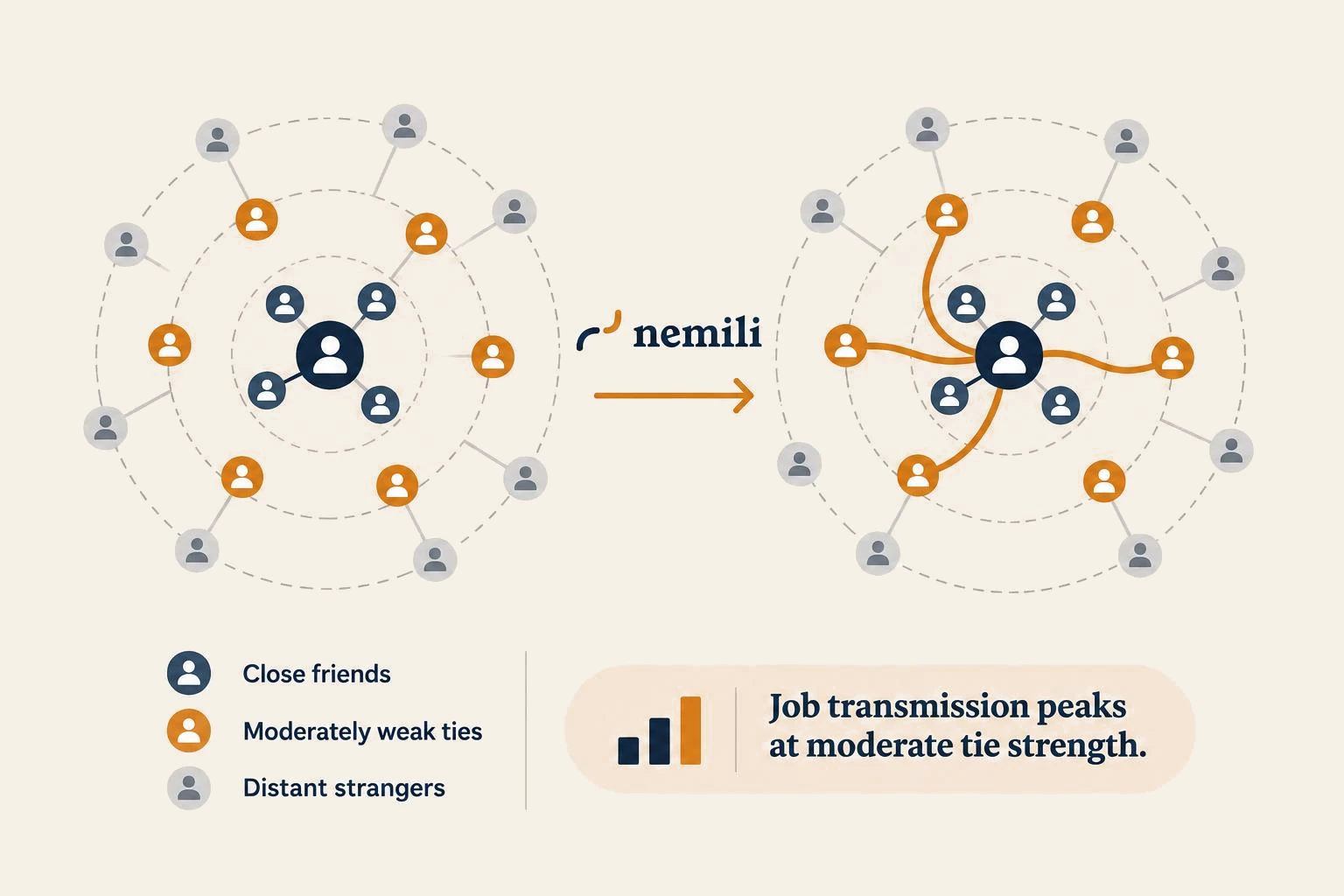
Network of close friends, moderately weak ties and distant strangers, with moderately weak ties highlighted

Concept based on the study's findings.

Source: Rajkumar et al., Science, 2022 · Granovetter, 1973 · Wanberg et al., 2020

02

That access isn't evenly shared.

A study of 21 billion friendships in the US found that low-income children who grow up with more high-income friends tend to earn more as adults: about 20 percent more on average, if they had the connectedness of the average high-income child. In Sweden, parents' workplaces turned out to be an important route into young people's first jobs, with larger effects for graduates with weaker credentials.

Relevant for: Students · Universities

Models of network-based labour markets show that employment is correlated across a person's contacts, so a group that starts with weaker employment can stay behind persistently, even when qualifications and effort are equal. Similar people also tend to share similar contacts, so the same opportunities keep circulating in the same circles. A review of 97 field experiments in nine European and North American countries, in which fictitious applicants with equal qualifications apply for the same jobs, found that applicants from minority backgrounds receive fewer callbacks in every country studied. The OECD also finds that educational outcomes track family background: on average across OECD countries, 26 percent of 25-34-year-olds whose parents did not complete upper secondary education hold a tertiary qualification, compared with 70 percent of those with at least one tertiary-educated parent (2023 data). This shows unequal educational outcomes, not a direct measure of network access. The friendship study is based on US data.
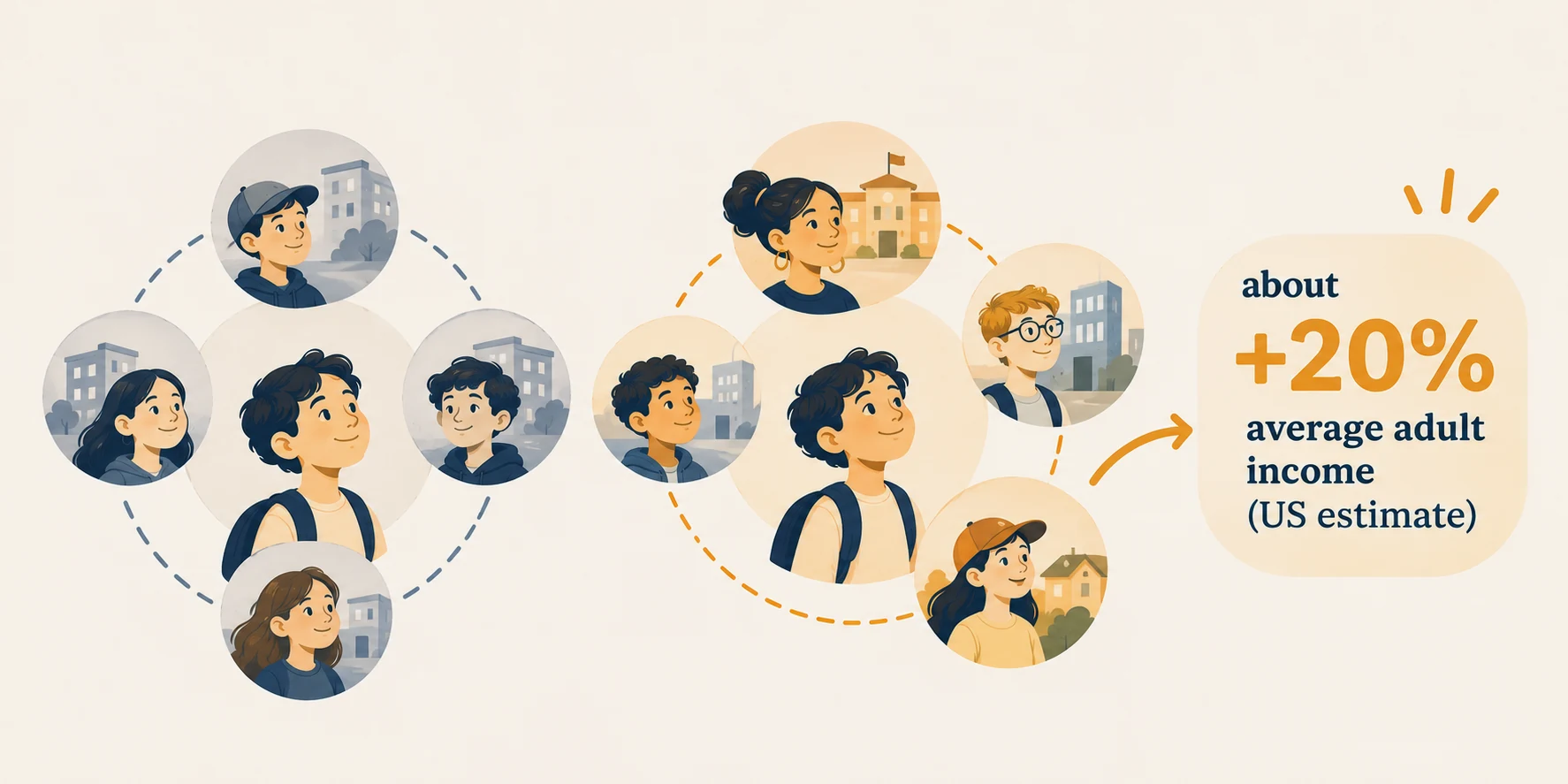
Two childhoods: one with friends only from similar backgrounds, one with friends across backgrounds

Concept based on US friendship data: an association, not a guarantee.

Source: Chetty et al., Nature, 2022 · Kramarz & Skans, 2014 · Calvó-Armengol & Jackson, 2004 · Quillian et al., 2019 · OECD 2025 · Tassier & Menczer, 2008

III

Chapter III

The right conversation can change what happens next.

Mentoring outcomes · Resemblance

01

Mentoring changes outcomes.

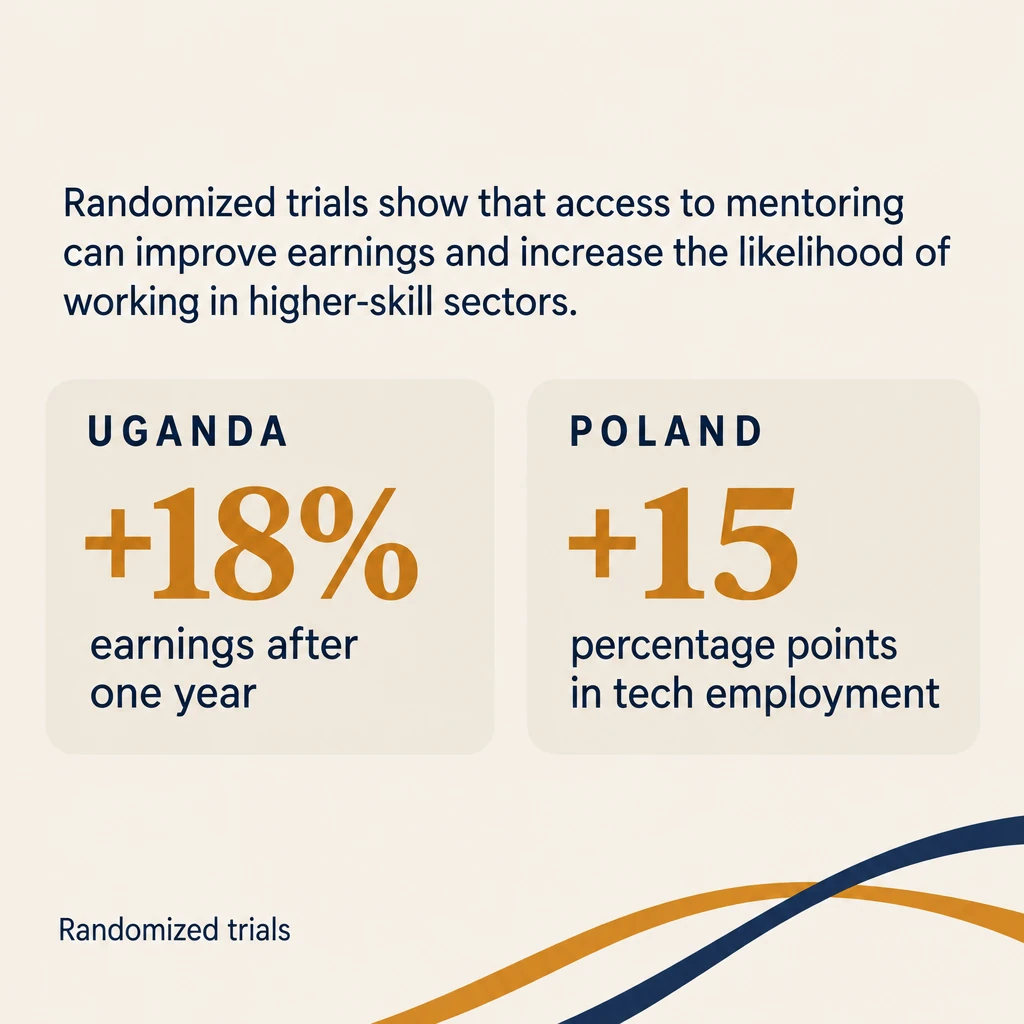
Two randomized trials tested what happens when people get a mentor a few steps ahead. In Uganda, mentored vocational students earned 18 percent more a year later. In Poland, one-to-one mentoring raised technology employment by 15 percentage points after twelve months.

The Uganda trial randomly gave 1,112 vocational students a mentor from their own trade. Three months after graduation, mentored students were 15 percent more likely to be working and 27 percent less likely to have left the labour market. The researchers found it worked mainly through realistic information about entry-level jobs and encouragement, not through referrals. The Poland trial evaluated one-to-one mentoring for women who had trained in IT but not yet found a tech job. Both are working papers, and effects varied across participants.

02

The best conversations come from people who recognise your starting point.

Studies of mentoring find that shared values and attitudes predict a better relationship, while sharing gender, race or ethnicity did not. A 2024 review of 73 studies found positive potential for career choice and transitions, with cultural proximity between mentor and mentee as a factor worth designing for.

A major meta-analysis found that perceived similarity in values, attitudes and personality is among the strongest predictors of the support a mentee receives. A study of 565 science doctoral students at 70 US universities found that sharing attitudes, beliefs and values with a mentor predicted higher-quality mentoring. The 2024 systematic review also noted that results are not uniformly positive.
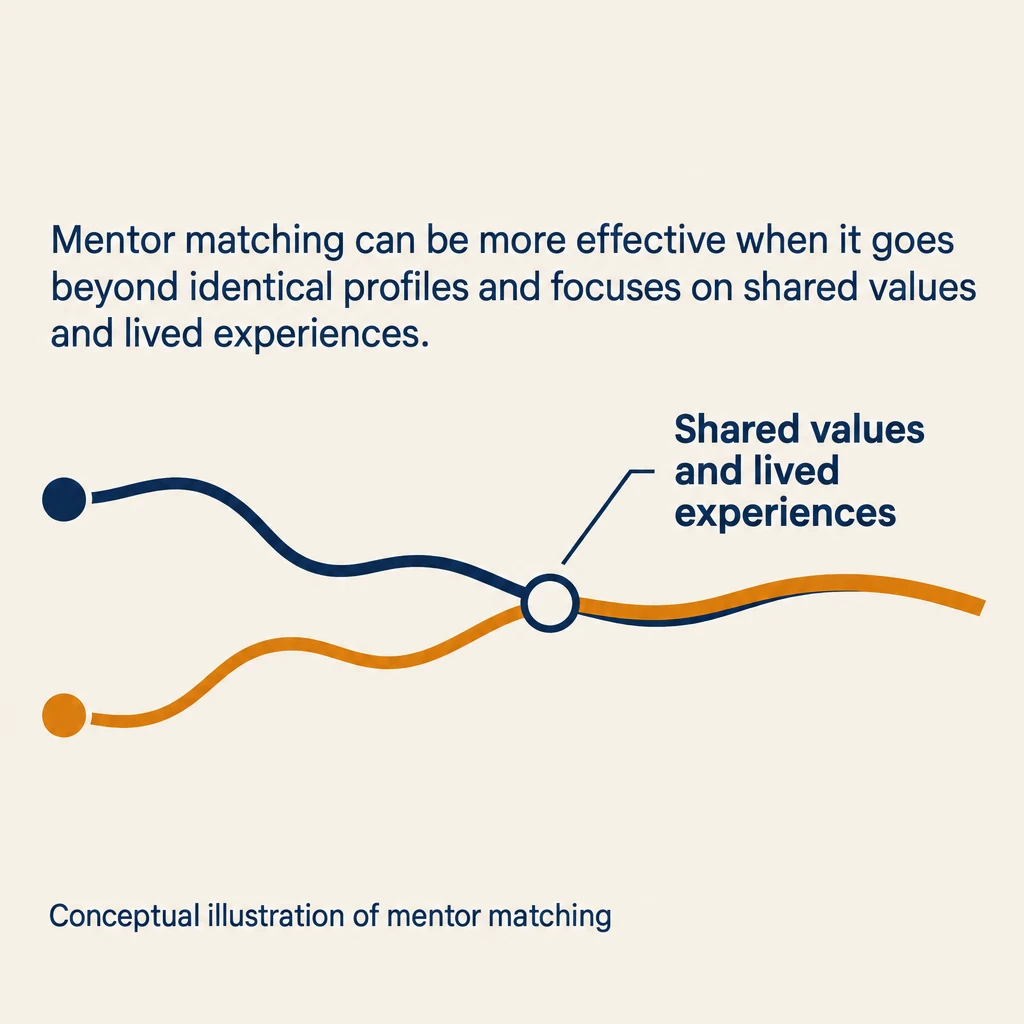
Two people with different career histories whose paths converge through shared values and experiences

Conceptual illustration.

Source: Eby et al., 2013 · Tuma & Dolan, 2024 · Nabi et al., 2024

The evidence points to a gap. Nemili is built to close it.

For universities and companies: Book a call

Sources

  1. 1.World Economic Forum (2025). The Future of Jobs Report 2025.
  2. 2.Gallup (2026). State of the Global Workplace 2026.
  3. 3.Tatel, C. & Wigert, B. (2024). 42% of Employee Turnover Is Preventable but Often Ignored. Gallup.
  4. 4.LinkedIn (2023). What is internal mobility and how to get it right. LinkedIn Talent Blog.
  5. 5.EY (2025). 2025 EY US Generation Survey, executive summary.
  6. 6.OECD (2025). Education at a Glance 2025, indicator B5: Who is expected to complete tertiary education?
  7. 7.Wanberg, C. R., Ali, A. A. & Csillag, B. (2020). Job seeking: the process and experience of looking for a job. Annual Review of Organizational Psychology and Organizational Behavior, 7, 315-337.
  8. 8.Granovetter, M. S. (1973). The strength of weak ties. American Journal of Sociology, 78(6), 1360-1380.
  9. 9.Rajkumar, K., Saint-Jacques, G., Bojinov, I., Brynjolfsson, E. & Aral, S. (2022). A causal test of the strength of weak ties. Science, 377, 1304-1310.
  10. 10.Calvó-Armengol, A. & Jackson, M. O. (2004). The effects of social networks on employment and inequality. American Economic Review, 94(3), 426-454.
  11. 11.Tassier, T. & Menczer, F. (2008). Social network structure, segregation, and equality in a labor market with referral hiring. Journal of Economic Behavior & Organization, 66(3–4), 514–528.
  12. 12.Quillian, L., Heath, A., Pager, D., Midtbøen, A. H., Fleischmann, F. & Hexel, O. (2019). Do some countries discriminate more than others? Evidence from 97 field experiments of racial discrimination in hiring. Sociological Science, 6, 467-496.
  13. 13.Alfonsi, L., Namubiru, M. & Spaziani, S. (2026). Meet Your Future: Experimental evidence on the labor market effects of mentors. CEPR Discussion Paper 21963 (working paper; earlier version: G²LM|LIC Working Paper No. 87, 2024).
  14. 14.Athey, S. & Palikot, E. (2026). Effective and scalable programs to facilitate labor market transitions for women in technology. NBER Working Paper 34750.
  15. 15.Eby, L. T. et al. (2013). An interdisciplinary meta-analysis of the potential antecedents, correlates, and consequences of protégé perceptions of mentoring. Psychological Bulletin.
  16. 16.Tuma, T. T. & Dolan, E. L. (2024). What makes a good match? Predictors of quality mentorship among doctoral students. CBE: Life Sciences Education.
  17. 17.Nabi, G., Walmsley, A., Mir, M. & Osman, S. (2024). The impact of mentoring in higher education on student career development: a systematic review and research agenda. Studies in Higher Education.
  18. 18.Chetty, R., Jackson, M. O., Kuchler, T., Stroebel, J., Hendren, N. et al. (2022). Social capital I: measurement and associations with economic mobility. Nature, 608, 108-121.
  19. 19.Kramarz, F. & Skans, O. N. (2014). When strong ties are strong: networks and youth labour market entry. Review of Economic Studies, 81(3), 1164-1200.
  20. 20.OECD (2020). Dream Jobs? Teenagers' career aspirations and the future of work.
  21. 21.Covacevich, C., Mann, A., Santos, C. & Champaud, J. (2021). Indicators of teenage career readiness: an analysis of longitudinal data from eight countries. OECD Education Working Papers, No. 258.
  22. 22.Whiston, S. C., Li, Y., Mitts, N. G. & Wright, L. (2017). Effectiveness of career choice interventions: a meta-analytic replication and extension. Journal of Vocational Behavior.
  23. 23.OECD (2026). How well prepared are upper secondary students to succeed in tertiary education? Education Indicators in Focus, No. 92.